
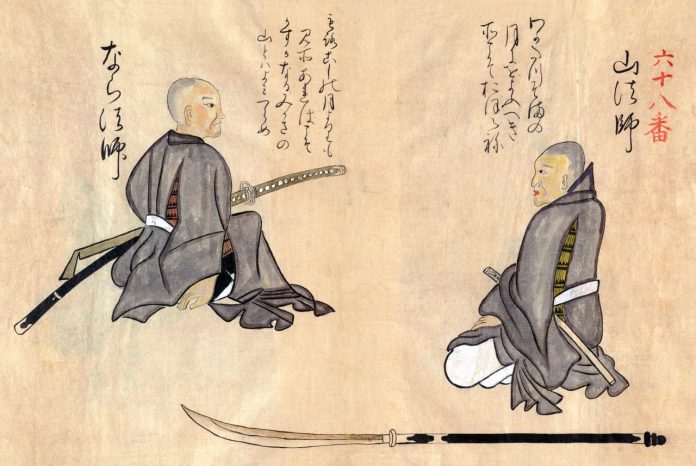


Ninja historic illustration, Meiwa era, c. 1770.
The ninja or shinobi, often depicted as shadowy figures of stealth and combat, were also deeply spiritual warriors. Their spiritual practices were integral to their training and way of life, providing them with mental clarity, emotional balance, and a profound connection to the natural world.
Ninjutsu, the art of the ninja, originated in feudal Japan. The ninja were not just spies and assassins but also warrior monks who sought enlightenment through rigorous training and ascetic practices. They lived a life of minimalism, renouncing material comforts to achieve spiritual and physical mastery.
Core Spiritual Practices
1. Kuji Letter (Nine Hand Seals)
Kuji-Kiri, also known as the Nine Hand Seals, is a series of symbolic hand gestures and mantras used by ninjas to focus their mind and harness spiritual energy. Each of the nine gestures represents a specific concept and is believed to invoke certain powers or states of mind. The nine hand seals are:
There can be slight variations in interpretation depending on the source. These gestures are often accompanied by chants or mantras that enhance their mystical effects. The practice of Kuji-Kiri was believed to grant ninjas heightened awareness, intuition, and even supernatural abilities such as healing and protection.
2. Meditation and Mindfulness
Meditation was a cornerstone of ninja training, essential for cultivating a state of mindfulness. Through meditation, ninjas developed the ability to remain calm and focused in stressful situations. This practice also helped them to enhance their intuition and achieve a deep sense of inner peace. Ninja meditation often involved breath control, visualization, and the circulation of Ki energy, which is considered the life force.
3. Nature Connection
Ninja philosophy emphasized a profound connection to nature. They believed that by attuning themselves to the natural world, they could draw upon its energy and wisdom. This connection was fostered through outdoor training, meditation in natural settings, and a deep respect for all living things. Activities such as observing wildlife, understanding natural patterns, and practicing stealth in natural environments helped ninjas develop their intuition and sensory awareness.
4. Ascetic Practices
The ninja often engaged in ascetic practices to strengthen their willpower and discipline. These practices included fasting, physical endurance training, and solitary retreats in nature. Asceticism was seen as a way to purify the body and mind, preparing the ninja for both spiritual and physical challenges. The rigorous training and self-denial helped ninjas build resilience and mental fortitude.
Philosophical Foundations
1. The Five Elements (Godai)
The concept of Godai, or the five elements, is central to ninja philosophy and Japanese Buddhist thought. These elements are Earth (Chi), Water (Sui), Fire (Ka), Wind (Fu), and Void (Ku). Each element symbolizes different aspects of existence and human experience, and understanding these elements helps the ninja achieve balance and harmony in their lives⁷⁸.
-
Earth (Chi): Represents solidity and stability. It symbolizes the physical body, endurance, and the ability to remain grounded and steadfast. In combat, it relates to strong, immovable stances and resilience.
-
Water (Sui): Symbolizes fluidity and adaptability. It represents emotions, intuition, and the ability to flow around obstacles. In martial arts, it involves flexible movements and the ability to adapt to changing situations.
-
Fire (Ka): Represents energy and transformation. It symbolizes passion, drive, and the power to change and overcome challenges. In combat, it relates to aggressive, high-energy attacks and the ability to harness one’s inner strength.
-
Wind (Fu): Symbolizes freedom and movement. It represents intellect, communication, and the ability to move swiftly and unpredictably. In martial arts, it involves evasive maneuvers and agility.
-
Void (Ku): Represents the essence of all things and the source of creativity. It symbolizes the spiritual and the unknown, the potential for all possibilities. In combat, it relates to spontaneous and innovative techniques that arise from a deep understanding of the other elements.
By embodying these elements, the ninja could achieve a harmonious balance in their physical, emotional, and spiritual lives.
2. The Four Gates to Freedom
The Four Gates to Freedom are a set of initiatory practices that the ninja believed were essential for achieving self-mastery and spiritual enlightenment. These gates involve overcoming specific challenges to unlock one’s true potential.
-
Overcoming Fear: The first gate involves confronting and overcoming one’s fears. This process requires courage and the willingness to face the unknown. By overcoming fear, the ninja could act with confidence and clarity.
-
Finding True Power: The second gate is about discovering inner strength and resilience. True power comes from within, and the ninja sought to cultivate this through rigorous training and self-discipline.
-
Overcoming Soul Fatigue: The fourth gate addresses the exhaustion and weariness that can come from life’s challenges. By nurturing the spirit and maintaining a positive outlook, the ninja could overcome this fatigue and continue to grow and evolve.
Passing through these gates was seen as essential for achieving self-mastery and spiritual enlightenment. The practices associated with these gates helped the ninja develop the mental and emotional resilience needed to navigate the complexities of life.
Final Thoughts
Through integrating physical training with deep spiritual discipline, the ninja achieved a unique blend of strength, wisdom, and inner peace. Their legacy continues to offer valuable insights into the power of the human spirit.
The spiritual practices of the ninja continue to inspire people around the world. Modern practitioners often adapt these ancient techniques to suit contemporary lifestyles, incorporating elements of mindfulness, self-awareness, and holistic wellness into their daily routines.
By incorporating these principles into your daily life, you can cultivate a sense of inner peace, strength, and harmony. The journey of self-mastery is ongoing, and each step you take brings you closer to a deeper understanding of yourself and the world around you
*The views and opinions expressed on this website are solely those of the original authors and contributors. These views and opinions do not necessarily represent those of Spotter Up Magazine, the administrative staff, and/or any/all contributors to this site.